21 May 2026
Adapting Traditional Table Games for Immersive Virtual Environments in Regulated Markets

Regulated markets have seen operators integrate virtual reality headsets and motion tracking systems with classic table games such as blackjack, roulette and poker since the mid-2020s, and data from May 2026 shows continued investment in these platforms across multiple jurisdictions.
Developers replicate physical mechanics through physics engines that calculate card shuffles, chip stacks and wheel spins in real time while maintaining the same probabilities that players encounter at land-based tables, and this approach lets licensed operators meet existing fairness standards without introducing new variables.
Technology Behind the Transition
Traditional game layouts appear inside three-dimensional spaces that users navigate with hand controllers or full-body tracking suits, while software layers enforce betting limits and session timers that align with local rules. Observers note that studios often combine Unity or Unreal Engine environments with certified random number generators so that outcomes remain verifiable by auditors.
Hardware improvements in headset resolution and latency reduction allow multiple participants to sit at the same virtual table from separate locations, and this shared space creates the social element that once required a physical casino floor. Figures from equipment suppliers indicate that headset shipments to gaming companies rose steadily through early 2026 as more operators requested custom table environments.
Regulatory Frameworks Across Regions
Jurisdictions such as New Jersey and Nevada require that virtual table systems undergo the same testing protocols applied to online RNG games, including source code reviews and payout percentage verification. The Nevada Gaming Control Board published updated technical standards in spring 2026 that address avatar identity confirmation and in-game chat moderation for immersive formats.
Canadian provinces including Ontario have issued guidance documents that treat VR table games as extensions of existing iGaming licences, and operators must demonstrate that geofencing and age verification remain active inside the virtual environment. These requirements ensure that players cannot bypass location or eligibility checks simply because they wear a headset.
Implementation Examples in Licensed Markets
One operator in Atlantic City launched a VR roulette studio in late 2025 that streams from a regulated data centre to approved headsets, and session data collected through May 2026 showed average play durations comparable to those recorded on standard mobile or desktop versions. Similar pilots have appeared in parts of Europe where national regulators already permit remote table games.
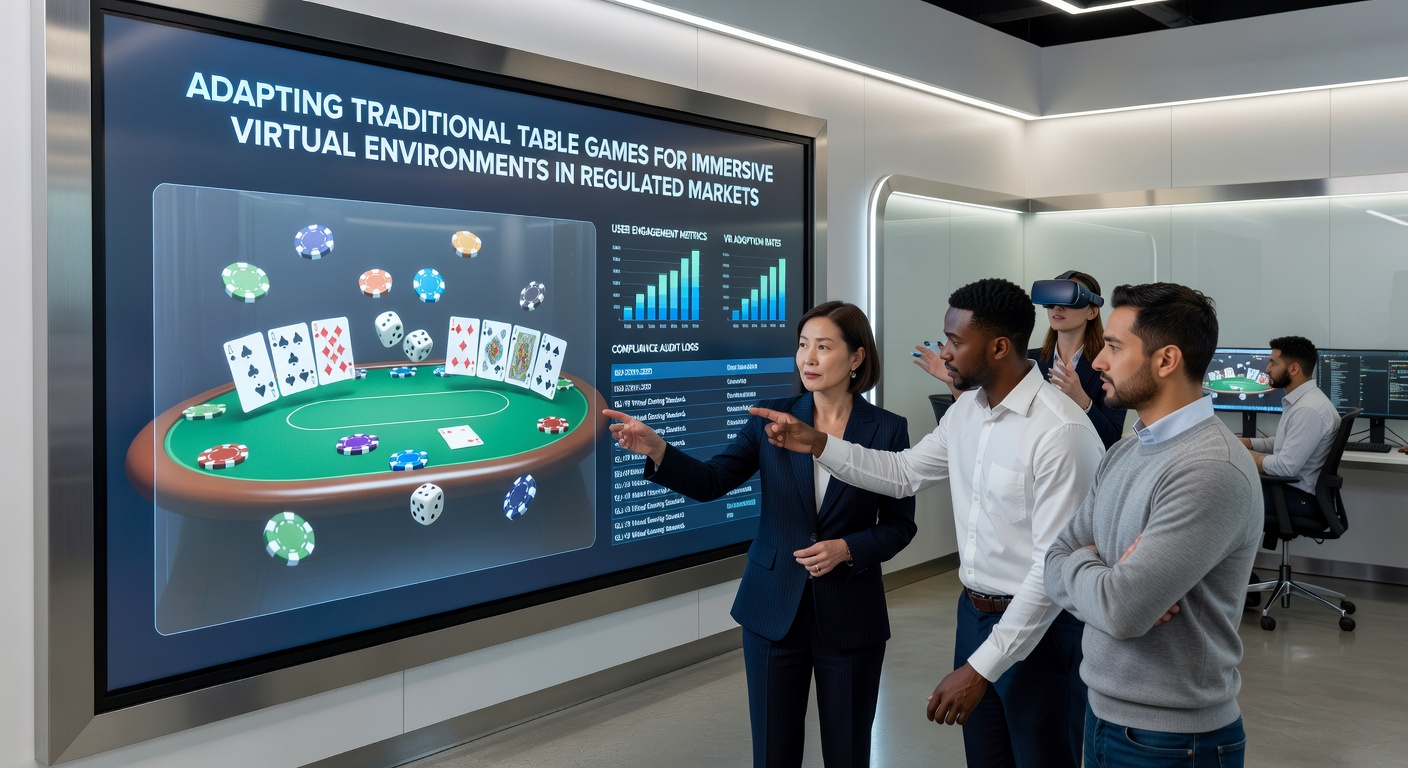
Industry groups such as the European Gaming and Betting Association have compiled reports on how immersive interfaces affect responsible gambling tools, and these documents highlight the need for visible reality checks that appear at fixed intervals regardless of the visual immersion level. Operators respond by embedding pause functions that exit the virtual space and return the user to a standard account dashboard.
Challenges in Maintaining Compliance
Because virtual environments can obscure interface elements, regulators insist that critical information such as current balance, bet size and remaining session time stays anchored in the user's field of view at all times. Testing laboratories now include VR-specific scenarios in their certification processes to confirm that overlays do not disappear during head movement.
Data security requirements also extend to motion-capture recordings that could reveal player identity or behaviour patterns, and companies must store these files under the same encryption standards applied to financial transaction records. Audits scheduled for 2026 examine both the game logic and the surrounding virtual infrastructure to close potential gaps.
Future Outlook for Immersive Table Games
Market analysts tracking North American and Australian regulated sectors expect further pilots that combine mixed-reality headsets with physical props such as real chips placed on sensor mats, yet any such hybrid must still satisfy the same licensing criteria applied to fully digital versions. Research institutions continue to examine player engagement metrics from existing VR deployments to inform future rule adjustments.
Conclusion
Adaptation of classic table games into immersive virtual environments proceeds through coordinated efforts among technology providers, testing laboratories and regulatory bodies that already oversee remote gambling. Progress recorded through May 2026 demonstrates that existing compliance mechanisms can extend to new formats when operators integrate verification steps, fairness controls and responsible gaming features directly into the virtual experience.