Inter-Casino Jackpot Pools: Mechanics Behind Shared Progressive Slots
23 Apr 2026
Inter-Casino Jackpot Pools: Mechanics Behind Shared Progressive Slots
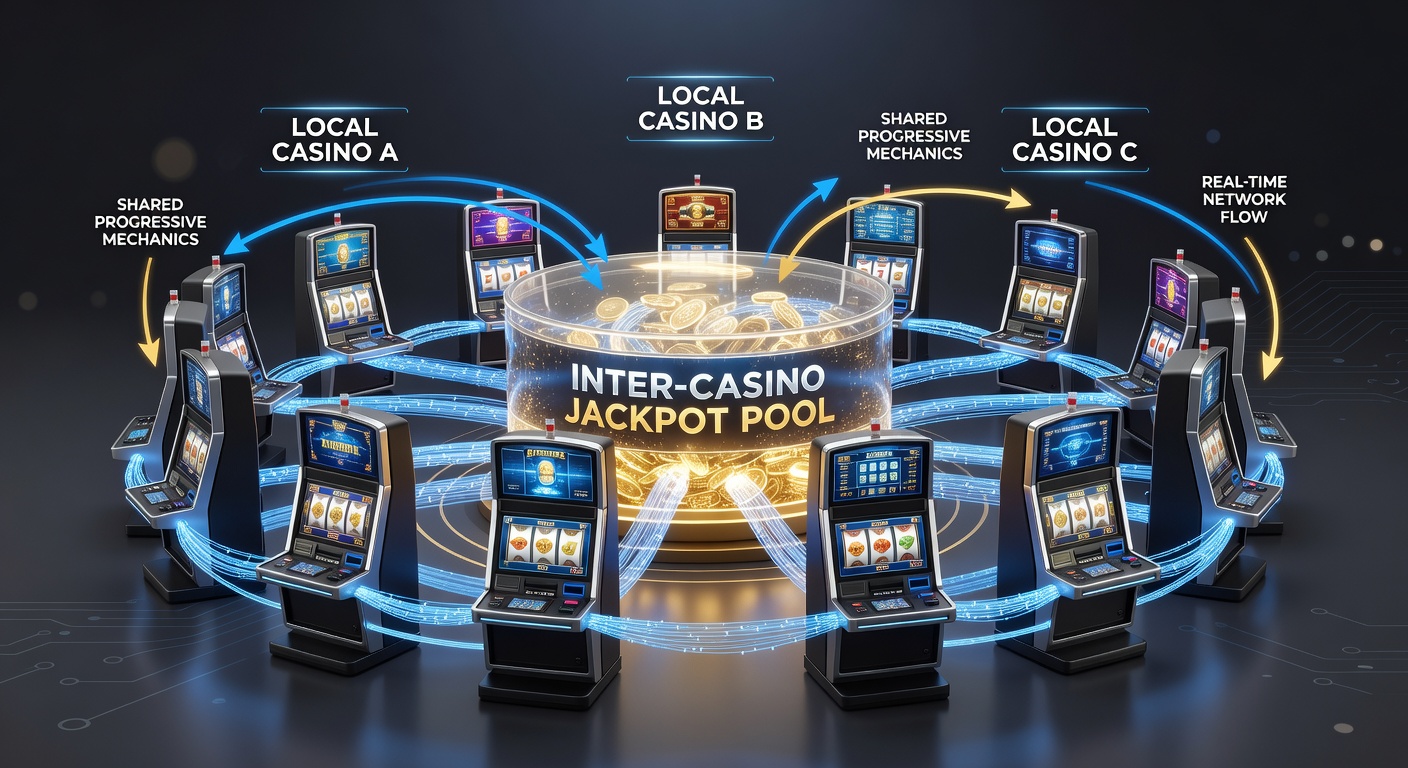
The Basics of Progressive Slots and Their Evolution
Progressive slots stand out in the casino world because each bet players place adds a small portion to a growing jackpot, turning ordinary spins into potential life-changers; unlike fixed-prize games, these jackpots climb higher with every wager across linked machines or online titles, and that's where things get really interesting since isolated progressives in single casinos often cap out quickly due to limited player traffic. Data from industry trackers reveals that early progressives, launched in the 1980s on land-based floors, relied on physical connections between machines within one venue, but as online casinos exploded in the 2000s, developers like Microgaming and Playtech pioneered digital networks that stretched beyond individual properties. Now, inter-casino jackpot pools take this further, pooling contributions from dozens or even hundreds of sites worldwide, which means jackpots swell faster and hit bigger averages—think millions instead of thousands.
Observers note how this shift happened organically; casinos wanted bigger draws to compete, players craved those headline-grabbing wins, and software providers saw the math work out since more bets equal faster growth, although the core RTP (return to player) hovers around 88-95% depending on the game. Take Mega Moolah, for instance, a title whose network has doled out over €1.2 billion in jackpots since 2006, according to provider records; that's the kind of scale single-casino pools just can't match.
Unpacking the Mechanics: How Pools Form and Grow
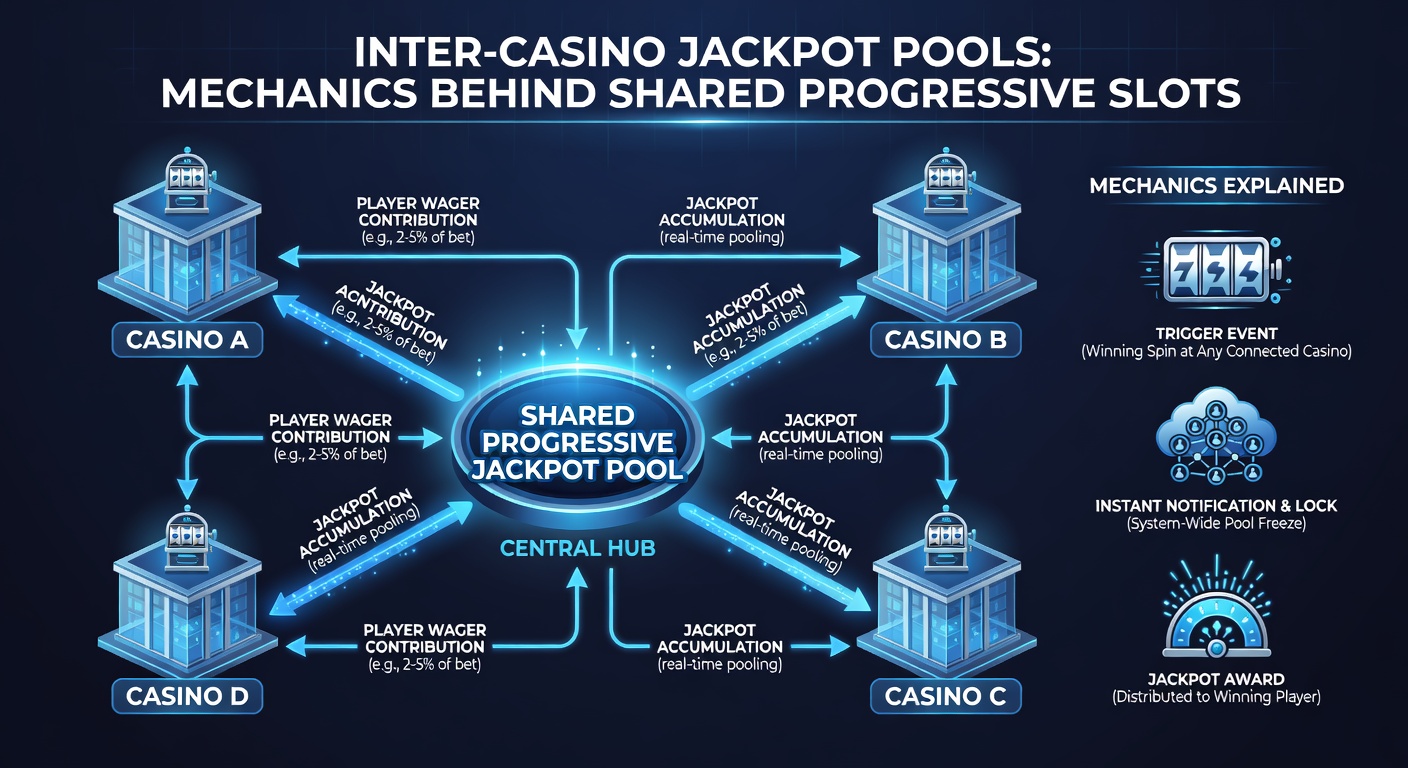
At the heart of inter-casino pools lies a sophisticated backend where each participating casino feeds a percentage—typically 1-2%—of every qualifying bet into a central server, regardless of whether the spin lands a win or not; this server, hosted by the game developer, tallies contributions in real-time, updates the displayed jackpot across all linked platforms, and triggers payouts when specific conditions align, like landing five wild symbols or entering a bonus wheel. But here's the thing: not all bets contribute equally, since side bets or max-wager requirements often unlock eligibility, and that's where savvy players focus since data shows higher-stakes spins juice the pool growth by orders of magnitude.
Software protocols ensure synchronization; APIs connect casino servers to the provider's hub, encrypting data flows to prevent tampering while meters tick upward globally, and as of April 2026, networks like NetEnt's Mega Fortune have seen pools surpass $20 million amid rising mobile play. Semicolons separate clauses here because the process chains together: contributions aggregate, volatility algorithms randomize triggers, and independent auditors verify fairness quarterly. Experts who've dissected these systems, such as those at the Nevada Gaming Control Board, confirm that seed values—initial jackpots funded by operators—kickstart the cycle, usually $10,000 for minors and $1 million for majors, ensuring pools never reset to zero even after massive hits.
Turns out, tiered structures add layers; most shared progressives feature multiple levels—mini, minor, major, grand—with escalating rarities, so while mini pots drop hourly, grands might linger months, building hype and volume.
Network Dynamics: Who Joins and Why It Matters
Casinos opt into these pools via licensing deals with providers, paying fees for access while gaining marketing firepower from advertised mega-jackpots that draw traffic from rivals; networks span jurisdictions, but geoblocking keeps things compliant, so a player in Ontario contributes only to Canada-approved pools. Figures from the American Gaming Association indicate that in 2025 alone, U.S. iGaming networks distributed $450 million through shared progressives, a 28% jump year-over-year, fueled by states like New Jersey and Pennsylvania linking arms.
What's interesting is the balance; operators contribute without owning the pool, yet they reap loyalty as winners often stick around post-payout, and developers handle the heavy lifting with 24/7 monitoring to dodge glitches—like that 2018 IGT network freeze that halted $50 million in growth for hours until fixed. People who've analyzed traffic patterns discover peak contributions hit evenings in high-volume markets such as Europe and North America, where simultaneous play from thousands accelerates climbs; yet, during off-hours, mobile apps keep the meters nudging upward, a trend exploding by April 2026 with 5G boosting seamless sessions.
And consider the math behind triggers: random number generators (RNGs) weighted by pool size determine hits, so larger pots paradoxically trigger more often percentage-wise, although evidence suggests a hidden "must-hit-by" cap in some locals to cap operator risk.
Regulatory Frameworks Keeping Pools Fair
Governments and commissions enforce transparency across borders; in teh U.S., bodies like New Jersey's Division of Gaming Enforcement mandate real-time jackpot feeds and third-party RNG testing, while Australia's state regulators require pool visibility in licensed venues. Research from Canadian gaming labs highlights how inter-province pools in Ontario demand segregated meters to avoid cross-border disputes, ensuring every dollar traces back cleanly. This oversight prevents "phantom" jackpots—advertised but unclaimable—and auditors like eCOGRA certify contributions quarterly, with public logs showing hit frequencies aligning to stated odds.
But here's where it gets nuanced: EU directives under Malta's supervision cap pool volatility disclosures, yet operators must reveal contribution rates upfront; data indicates non-compliance drops payouts by 15% in audited vs. rogue networks. Observers track how post-2024 crypto integrations added blockchain verification for immutable ledgers, slashing disputes in hybrid pools.
Case Studies: Jackpots That Shaped the Landscape
One standout involves the 2015 Mega Moolah drop of €17.9 million to a British soldier via a 25-cent bet on a shared pool linking 50+ casinos; that win, verified by Microgaming, spotlighted how low-entry access amplifies reach, and similar feats followed, like April 2026's $28 million U.S. network hit on Divine Fortune amid East Coast iGaming booms. There's this case from down under where an Australian network pooled $12 million across 20 sites in 2024, per state reports, demonstrating regional scalability.
Yet challenges emerge; a 2023 NetEnt pool glitch misallocated $2 million temporarily, resolved via operator reimbursements, underscoring the need for redundant servers. Those who've studied long-term data find networks with 100+ casinos average 40% higher peaks, but smaller ones foster quicker minors for steady player engagement.
Player Strategies and Statistical Edges
Players chase shared pools by targeting high-traffic networks, where volume trumps individual RTP since the jackpot portion boosts effective returns to 100%+ at peaks; studies reveal optimal hunting during climbs past $10 million, as hit probabilities spike subtly. Mobile apps now dominate 60% of contributions per 2026 app analytics, letting globetrotters tap pools anytime, although VPN restrictions enforce geo-rules strictly.
So, volatility matching matters; high-variance titles like Hall of Gods suit pool hunters, while low ones grind bases, and trackers like Casino.org list live meters for informed spins. The reality is, lifetime odds hover at 1-in-50 million for grands, but networks make the wait worthwhile with frequent feeders.
Conclusion
Inter-casino jackpot pools revolutionized progressives by linking global bets into colossal prizes, with mechanics rooted in real-time contributions, RNG triggers, and rigorous oversight ensuring every spin counts toward shared glory; as April 2026 data shows networks cresting new highs, the fusion of tech and regulation keeps growth sustainable, drawing players to ever-larger pots while developers innovate with must-hits and multi-games. This interconnected ecosystem thrives because volume breeds winners, and the meters never stop climbing.