Unified RNG Testing Standards Emerge as Priority for Cross-Border Slot Regulators
Katja Werner · Aug 13, 2026

Unified RNG Testing Standards Emerge as Priority for Cross-Border Slot Regulators
Regional gaming authorities have accelerated discussions on aligning random number generator testing procedures for slot systems that operate across multiple jurisdictions, and these efforts gained momentum during meetings held in August 2026. Data from multiple oversight bodies show that inconsistent certification methods create delays when operators expand progressive jackpot networks into new markets, while figures from industry reports indicate that operators spent an average of 14 weeks securing separate approvals in three or more regions during 2025.
Current Regulatory Landscape
Authorities in North America and the Asia-Pacific region have formed working groups to compare existing RNG evaluation criteria, and these groups include representatives from the Nevada Gaming Control Board along with counterparts in Australia and Canada. The groups examined how certification labs apply statistical tests for randomness, noting that variations in sample sizes and test batteries produce different pass rates even when the same software undergoes review. One study released by an academic research center found that 23 percent of slot titles required additional testing rounds when moving from a Canadian provincial license to an Australian state license because the testing thresholds differed by more than five percentage points on certain distribution checks.
Cross-border slot networks rely on centralized RNG servers that feed results to machines in several countries simultaneously, which makes uniform verification essential for maintaining player trust and regulatory compliance. Observers note that operators managing shared progressive pools must demonstrate that each connected jurisdiction receives equivalent assurance that outcomes remain unpredictable and fair, and this requirement has prompted regulators to map overlapping technical standards rather than maintain separate checklists.
Technical Harmonization Efforts
Technical committees have focused on standardizing the statistical test suites used during certification, including updates to chi-square, runs, and serial correlation analyses that laboratories apply to RNG output streams. These committees also reviewed requirements for entropy source validation and post-processing algorithms, areas where small differences in methodology previously forced operators to maintain multiple versions of the same game engine. Data compiled by an international gaming association reveal that 41 percent of cross-border slot titles underwent at least one code modification solely to satisfy jurisdiction-specific RNG documentation formats during the previous two years.
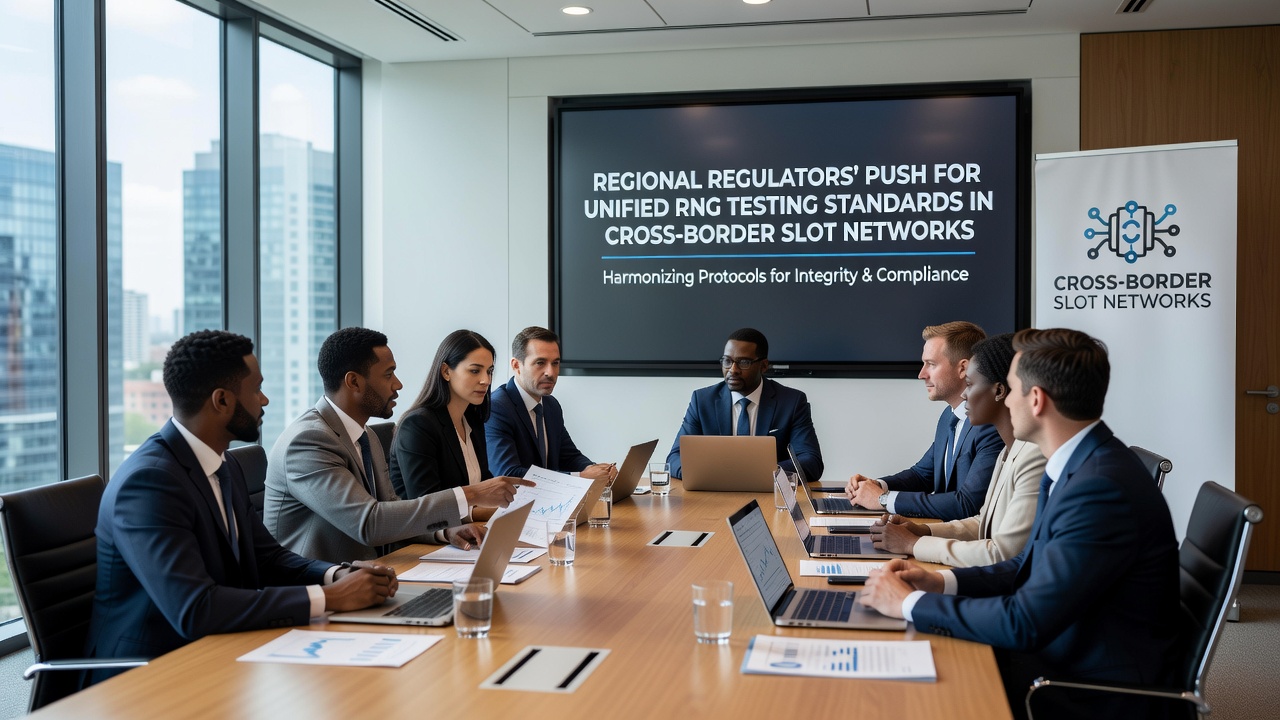
Regulators participating in the August 2026 roundtable agreed to pilot a shared test report template that would allow a single certification package to satisfy initial review requirements in participating jurisdictions, provided each authority retains the right to request supplemental analysis. The template incorporates common data fields for seed generation methods, output sampling rates, and failure thresholds, while still permitting local additions when unique market conditions exist. Industry reports indicate that adoption of the template could reduce average certification timelines by approximately three weeks when an operator seeks simultaneous approvals in two or more regions.
Implementation Challenges and Progress
Differences in legal frameworks continue to shape how far harmonization can proceed, because some jurisdictions embed RNG testing rules directly into statute while others treat them as administrative guidelines subject to periodic revision. Authorities in one Canadian province, for example, require annual re-testing of live RNG modules, whereas an Australian state regulator accepts biennial reviews when operators demonstrate continuous monitoring through independent audit logs. These variations mean that even a unified test protocol must accommodate different re-certification cycles and documentation retention periods.
Despite these obstacles, several operators have begun submitting joint applications under the emerging framework, and early results show that laboratories certified in multiple regions can issue reports acceptable to more than one authority when the shared template is used. Figures released by a regional gaming research institute show that 17 slot titles completed simultaneous certification in two jurisdictions during the first quarter of 2026, compared with only four titles that achieved the same feat throughout 2024.
Conclusion
Regional regulators continue to refine the shared RNG testing framework through ongoing technical exchanges, and further alignment is expected as additional jurisdictions review the pilot template outcomes. The process focuses on maintaining each authority's ability to enforce local standards while reducing redundant evaluations that previously slowed cross-border slot network expansion. As the working groups incorporate feedback from the August 2026 sessions, operators and testing laboratories will gain clearer pathways for demonstrating compliance across borders without duplicating core statistical verification steps.